

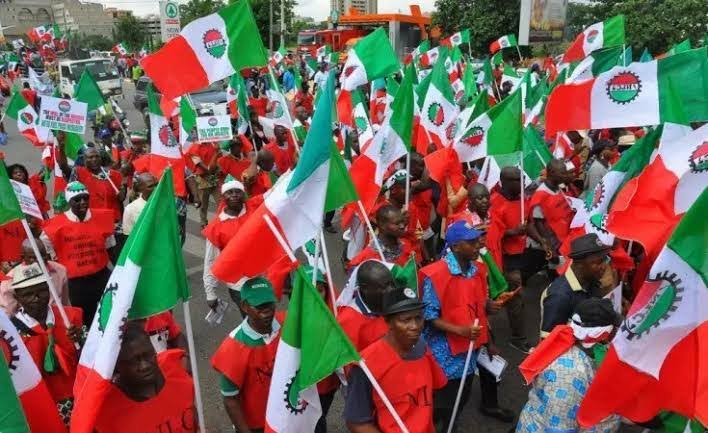
The Nigeria Labour Congress (NLC) has given the Federal Government a two-week ultimatum to reduce petrol prices nationwide and commence negotiations for a new national minimum wage, warning that it may take further action if its demands are not met.
The ultimatum, which takes effect on Friday, October 9, 2026, followed a joint meeting of the NLC’s National Executive Council and Central Working Committee in Abuja.
In a communiqué signed by its President, Joe Ajaero, the labour union directed its affiliates and allies to remain on alert as it expressed concern over worsening economic conditions, rising inflation and the declining purchasing power of Nigerian workers.
The Congress accused the Federal Government of pursuing economic policies that have intensified hardship among workers and the wider population.
“The joint meeting-in-session notes with profound alarm the deepening misery inflicted on the Nigerian working class and the broader masses by the neo-liberal policies of the federal government and its state institutions,” the communiqué stated.
The NLC said the continued depreciation of the naira, rising prices and stagnant wages had significantly weakened workers’ ability to meet basic household needs.
It argued that the current national minimum wage had lost much of its purchasing power, leaving many workers struggling to afford food, housing, healthcare, transportation and education.
“The current national minimum wage has been rendered worthless by the relentless depreciation of the naira and the astronomical rise in the cost of living,” the union said.
The Congress called for immediate renegotiation of the national minimum wage, insisting that discussions should begin before the end of October.
It said the proposed negotiations must produce a living wage that reflects prevailing economic realities and enables Nigerian workers to maintain a reasonable standard of living.
“The Congress demands a living wage that reflects the true cost of living and the dignity of the Nigerian worker. Any further delay by the federal government remains unacceptable,” the communiqué added.
Beyond wages, the NLC demanded an immediate reduction in the pump price of Premium Motor Spirit, commonly known as petrol, to the level that prevailed when the current national minimum wage was signed into law in 2024.
According to the union, high petrol prices have continued to drive up transportation fares, food prices and the cost of other essential goods and services.
It urged the Federal Government to work with relevant agencies to implement measures that would reduce fuel costs and ease the financial pressure on workers and households.
The labour body also called for tax relief and immediate wage awards to provide additional support to workers grappling with the rising cost of living.
It described these measures as essential steps towards reducing economic hardship and restoring workers’ purchasing power.
“These measures are the bare minimum required to alleviate the suffering of Nigerian workers and restore a measure of dignity to their lives,” the NLC said.
The Congress further demanded the implementation of the February 5, 2026, Terms of Settlement involving the Joint Health Sector Unions and Assembly of Healthcare Professionals.
It also called for the resolution of outstanding demands before the Joint Public Sector Negotiating Council, insisting that agreements reached with organised labour should be honoured.
The NLC warned that failure by the Federal Government to address its demands within the stipulated period could trigger further action by the labour movement.
It said the appropriate organs of the Congress would determine the next steps if the government failed to respond within the two-week deadline.
“Failure of which the NLC will be compelled to take remedial steps as would be directed by the relevant organs,” the communiqué stated.
The ultimatum places renewed pressure on the Federal Government to address workers’ concerns over wages, fuel prices and the broader cost-of-living crisis.
The NLC’s demands centre on the argument that wage adjustments alone may not sufficiently protect workers if rising transportation, food and other essential costs continue to erode their earnings.
The union is therefore seeking a combination of wage renegotiation, lower petrol prices, tax relief and the implementation of outstanding labour agreements.
The Federal Government’s response to the ultimatum will determine whether negotiations can resolve the dispute within the deadline or whether organised labour will consider further measures.
