

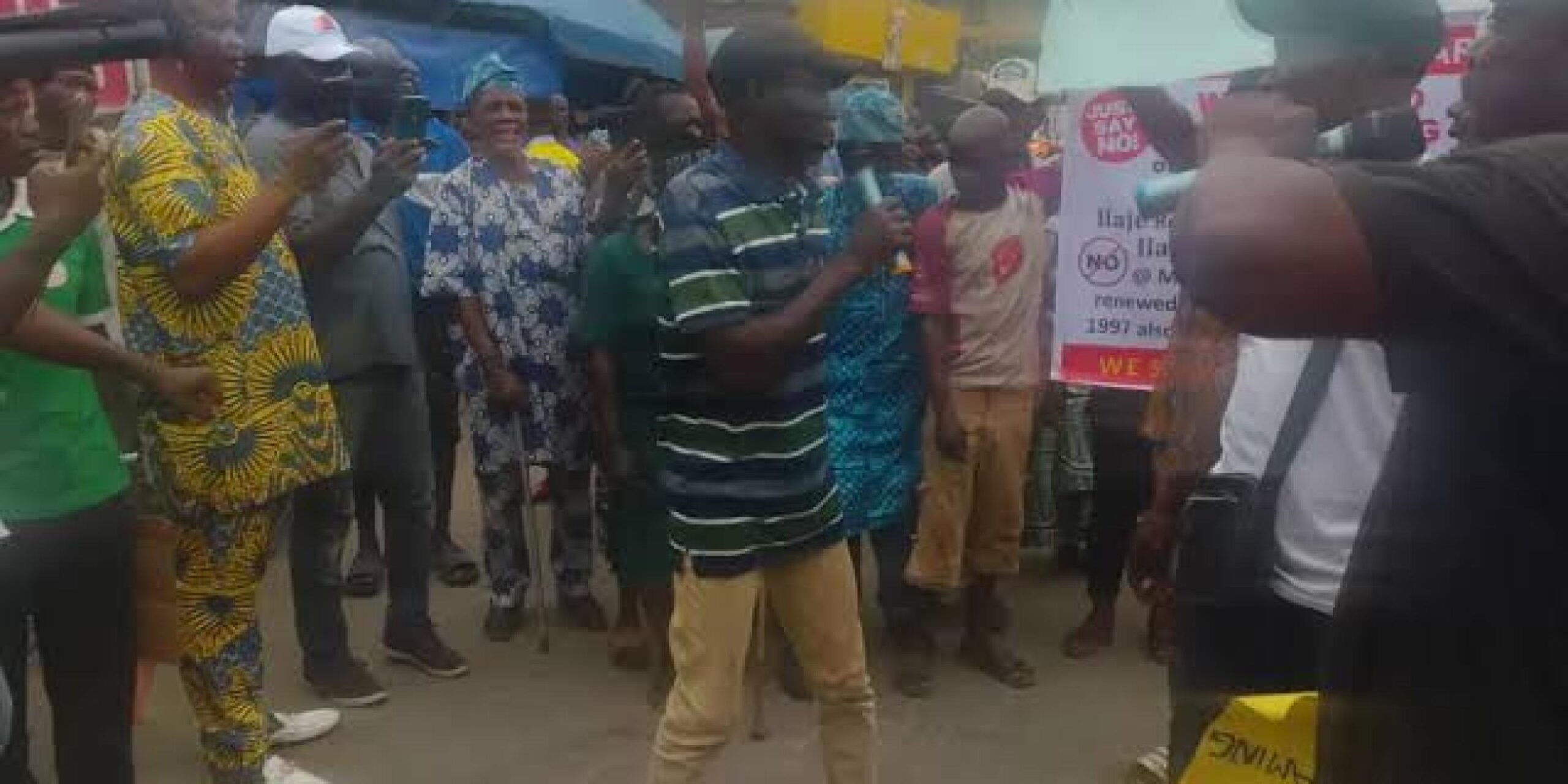
Residents of Ilaje community in Bariga Local Council Development Area (LCDA), Lagos State, staged a protest on Wednesday, rejecting the recent renaming of their street ‘Ilaje Road’ to ‘King Sunny Ade Road.’
The protesters, joined by traditional and community leaders, demanded the immediate restoration of the original name, which they say is a vital part of their heritage and identity.
The renaming, carried out last week by the outgoing chairman of the Bariga Local Council Development Area, David Kolade Alabi, just before the end of his tenure, has triggered a wave of anger and opposition from the local community, Lagosians and Nigerians across the country.
Addressing the protesters before the march, the Baale of Ilaje/Bariga, High Chief Kayode Ayetiwa, emphasised the historical significance of the road.
“We will not allow the legacy and name of Ilaje Road to be erased, no matter how prominent the person it’s renamed after,” THEWEST quoted Ayetiwa as saying.
He noted that the road has been known as Ilaje Road since 1948, underscoring that its name is deeply rooted in the community’s history.
According to Ayetiwa, the new LCDA Chairperson, Bukola Adedeji, had reached out to him on Tuesday, appealing for calm and assuring him that the controversial decision would be reviewed.
Nevertheless, the community pressed on with the protest and submitted a formal petition, demanding the reversal.
The protest letter, signed by Ayetiwa and other community leaders, described the renaming as unconstitutional and carried out without the consent of the council’s legislative arm.
Raphael Irowanu, President General of Egbe Omo Ilaje, voiced broader concerns, accusing the Lagos political establishment of sidelining the Ilaje people.
“The renaming of Ilaje Road is part of a bigger plan to erase us,” Irowanu said.
The protesters noted that it’s not about King Sunny Ade, whom they respect, but about preserving their identity.
He also warned that the continued marginalisation of the Ilaje community could have political consequences, particularly for the ruling All Progressives Congress (APC) in the upcoming 2027 general elections.
“If this issue is not addressed, it could affect the APC politically,” he said.
Irowanu further stressed the demographic significance of the Ilaje, stating that the group, of Yoruba origin and tracing their ancestry to Ile-Ife, numbers around four million people in Lagos State.
During the protest, protesters carried placards bearing messages such as “Ilaje Road, our history, our identity” and “We say no to renaming,” as they marched peacefully through the area.
The community vowed not to relent until the name “Ilaje Road” is officially reinstated.
The recent renaming of streets and public landmarks in Lagos has sparked intense public debate, protests, and legal scrutiny.
Human rights lawyer Femi Falana condemned the renaming trend as unconstitutional and authoritarian. He cited the Nigerian Constitution, which vests the authority to name streets solely in local government councils—not individuals or LCDA officials.
Falana referenced legal precedent (Chief Obidi Ume v. Abuja Metropolitan Management Council) to support his argument and criticised the renaming of landmarks like “Charley Boy Bus Stop” to “Baddo Bus Stop” without community consultation.
Former Lagos Governor Babatunde Fashola also weighed in, calling for the preservation of historical legacies. At a public event, he emphasised the importance of preserving names that honour figures like Dr. Isaac Ladipo Oluwole, Nigeria’s first African medical officer of health.
Fashola urged Lagosians to understand the stories behind street names and called for stronger support for the Lagos State Records and Archives Bureau (LASRAB).
Critics argue that the renaming efforts reflect political favouritism and ethnic marginalisation.
