

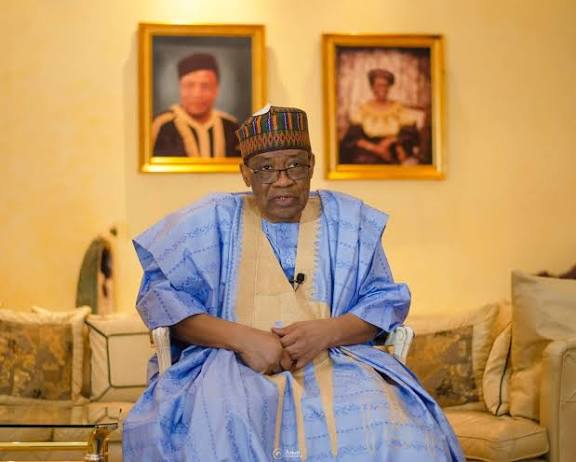
A survivor of the deaths of 37 suspected illegal miners in the custody of the Nigeria Security and Civil Defence Corps (NSCDC) in Niger State has alleged that the gold mining site where the miners were arrested belongs to former military Head of State, retired General Ibrahim Badamasi Babangida.
The claim was made by Malam Babawo Tudun Nasera while recounting the arrest and death of his 17-year-old brother, Salim, who was among the miners detained by NSCDC personnel.
Nasera made the allegation in a video seen by SaharaReporters, saying the miners were working at the site when security officials arrived and ordered them to stop. He claimed, however, that the alleged owner of the site had instructed them to continue working.
“They wanted us to stop working at the site,” Nasera said.
Asked why the authorities wanted the miners to stop working, he said the person he identified as the owner had directed that mining activities should continue.
“They wanted the work to stop, even though the owner of the place had said that we should continue working,” he said.
When asked who owned the mining site, Nasera responded, “It belongs to Babangida.”
He was subsequently asked to clarify whether he meant retired General Ibrahim Badamasi Babangida, popularly known as IBB, to which he answered in the affirmative.
Asked whether Babangida had told the miners to continue working at the site, Nasera replied, “Yes, he said we should continue working.”
The allegation, however, has since been categorically denied by Babangida.
In a response issued through his representative, Dr Danladi Umar Abdulhameed, the former military Head of State said the claim was false, baseless and completely without foundation.
“My attention has been drawn to a publication on your platform alleging that the mining site where illegal miners were arrested belongs to General Ibrahim Badamasi Babangida, GCFR,” Abdulhameed said.
“This allegation is false, baseless and completely without foundation.”
He added that Babangida had no connection whatsoever with the mining operation in question and urged members of the public to disregard the allegation.
It remains unclear whether the survivor was referring to ownership of the land, a mining lease, the operation itself or another form of association. There is currently no independent evidence establishing Babangida’s ownership or involvement in the mining site.
The issue has emerged amid an investigation into the deaths of 37 suspected illegal miners who were arrested during NSCDC operations at mining locations around M.I. Wushishi and Lukoto in Niger State on September 15 and 16.
Nasera also spoke about the death of his younger brother, Salim, whom he said was 17 years old when he died in NSCDC custody.
“They killed him. We saw him,” he said.
Asked to identify his brother, he responded: “His name was Salim. He was 17 years old.”
Nasera said the miners had gone to the mining site because they had few alternatives for earning a living and supporting their families.
“We went there looking for food. The mining site was where people went to find something to feed their families. It was hard work. Then Civil Defence officers came, arrested them and took them away. What were we supposed to do?” he said.
According to him, the detainees remained in NSCDC custody for three days.
“They kept them in custody for three days. They were all in their custody. We tried to get them released, but they refused and said they would not allow it,” he alleged.
Nasera said the families and associates of the detainees were unable to secure their release before the deaths were discovered.
The survivor also questioned the circumstances surrounding the deaths, saying the detainees had eaten before the bodies were discovered.
“Yesterday, they brought food to them and they ate. Each of them ate until he was satisfied. But from yesterday morning until today, what happened that made us come and find out that someone had died?” he asked.
He further claimed that the detainees were given what he described as some form of medicine and were exposed to heat.
Asked what he believed could have caused the deaths, he said: “If it was not medicine, what else could it have been?”
His account is among several testimonies emerging as authorities investigate the incident.
Other survivors have alleged severe overcrowding and poor ventilation in the detention facility. One survivor separately claimed that an unidentified substance was sprayed inside an overcrowded room before some detainees began collapsing. These accounts have not been independently established as the cause of the deaths.
The NSCDC initially attributed the deaths to a suspected disease outbreak, but authorities have said the actual cause has yet to be scientifically established.
Niger State Governor Umar Bago has confirmed that 37 people died in NSCDC custody and said medical, forensic and autopsy examinations were being conducted to determine what happened. The state government has also constituted a committee of inquiry.
The Federal Ministry of Solid Minerals Development has deployed a team of experts to investigate the incident and prepare a report on the circumstances surrounding the deaths.
Babangida, despite denying any connection to the mining operation, has separately condemned the deaths, describing the incident as tragic and deeply disturbing. He expressed condolences to the families of the deceased and called for a comprehensive investigation into the circumstances surrounding the fatalities.
The former military ruler also urged residents and families of the deceased to remain calm while investigations proceed.
With conflicting accounts now surrounding both the ownership of the mining site and the circumstances of the deaths, the ongoing investigations are expected to establish the facts and determine whether any individuals or institutions bear responsibility for the tragedy.
