

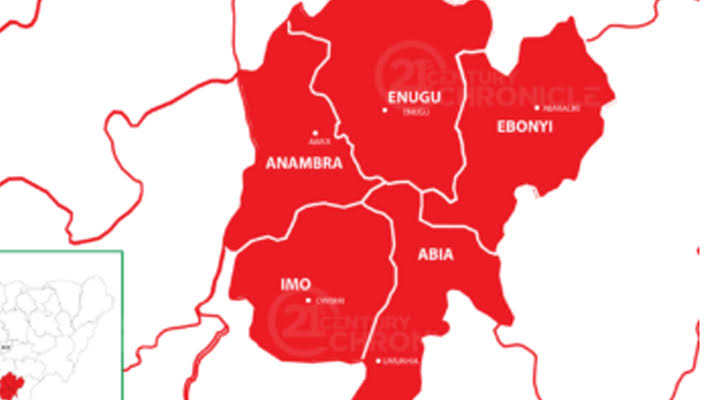
A region that taught Nigeria how to trade is now asking why it cannot seem to build. Nobody who has watched Aba’s workshops at midnight or Nnewi’s spare-parts dealers at dawn doubts the South East’s appetite for risk. Yet when a list of Nigeria’s celebrated technology and fintech founders circulated recently, with the universities they attended attached, few South Eastern institutions appeared on it. The reaction was predictable. Some blamed weak universities, others blamed governments, others blamed Abuja, investors and donors. Each explanation carried a fragment of truth. None explained why a region so rich in entrepreneurial energy keeps producing so little that is organised, scalable and durable.
My argument is that the South East does not have a talent problem. It has a conversion problem, and governments hold most of the levers. Entrepreneurial ability is abundant, but the region has not built the connections that repeatedly turn ability into firms that survive, grow, employ people at decent wages and sell beyond their home market. An economy is not the sum of its entrepreneurs. It is the sum of the relationships that allow them to find skills, capital, customers and trust. Where those relationships are thin, talent leaks away, or stays small.
Visibility is not performance. The fintechs founder’s list circulated recently deserves scrutiny before it is allowed to settle the question. A founder’s alma mater tells us where she studied, not what she learned there, nor whether the degree mattered more than the first job, the family business or the early investor. To credit a university for a famous company, or to condemn another for its absence from a list, is to confuse association with causation.
The list also measures the wrong thing. It counts a narrow category of visible digital companies, and says nothing about the engineer who raises a factory’s yield or the institution that supplies skilled technicians to a hundred small firms. A university that improves the productivity of local industry may contribute more than one that can claim a single celebrated founder. We should judge institutions by evidence on graduate competence, employer satisfaction, business survival and research that finds a buyer.
None of this excuses genuine weaknesses. Those who press the question of quality are right: certificates that outrun competence, examination malpractice and curricula divorced from industry damage any region’s prospects. But the remedy is better measurement and closer ties to industry, not a search for a single culprit.
The best recent evidence comes from the 2025 South-South and South-East Startup Ecosystem and State of Digital Jobs Report, published by StartupSouth. It maps 304 startups across eleven states in the two regions, up by more than half since 2023, with the South East now accounting for just over half of them. Disclosed funding rose from about $7.89 million to $10.23 million over 2023 to 2025. Enugu leads the regional table for capital raised.
The headline is encouraging, but the detail is sobering. Six startups account for 86.6 per cent of disclosed funding, and the median disclosed raise is only $500. More than half of the mapped startups were still pre-revenue. Nearly 70 per cent of the digital talents surveyed were unemployed or freelancing, often for employers outside the region.
Three cautions follow. These figures cover the South-South and the South East together, and should never be quoted as South Eastern totals. Disclosed funding is not total capital, and the sample of talents and employers is small. Most importantly, a larger count of startups is not a stronger economy. The evidence points to an ecosystem growing in headcount faster than in revenue, capital depth or local hiring capacity: many beginnings, few compounding successes. It vindicates those who stress networks, since the weakness lies in the thin ties between founders, customers and capital.
Economists use the term complementarity for a simple idea: an input is worth little unless the others are present. A brilliant programmer without a paying customer, a manufacturer with an excellent product but no working capital, a graduate engineer in a town with no firm to hire her, each represents idle potential. Market access and scale are the real barriers. A business in Awka may have a good product and still struggle, because the large buyers, the investors who can verify its accounts and the professionals who can help it meet standards are concentrated elsewhere. Capital follows information and proximity, so it drifts toward Lagos and away from firms that cannot easily be assessed.
Several mechanisms sustain the problem. Information is poor, so investors price risk high. Informal firms rarely keep the records that would let them borrow. Public procurement often fails to give capable local suppliers a transparent route in. Universities and firms rarely share projects. Each gap is survivable alone. Together they form a trap in which the rational response of every actor, whether to hold back capital or to emigrate, makes the next actor’s decision harder.
Different enterprises require different finance. The South East Development Commission’s South East Venture Capital Program is a serious attempt to address part of this trap. By the Commission’s own description, it is a proposed blended-finance fund of up to $50 million, drawing on public, development finance, institutional, private and diaspora capital, with investments of $50,000 to $2 million in technology-enabled firms at early stages. Its pitch competition has produced twenty-five winners, ten in an incubator track and fifteen in an accelerator track, against thirty places originally advertised.
The initiative has real merit: it targets an early-stage gap that banks will not fill. But three distinctions should govern how we judge it. A proposed fund is not capital committed, and capital committed is not capital disbursed. Winners selected are an output; surviving, growing firms are an outcome. And venture capital suits only a narrow class of businesses, those with repeatable models and a credible path to a large exit. It is the wrong instrument for most of the region’s productive firms.
A footwear maker in Aba needs a modern stitching line, not an equity round. An agro-processor in Ebonyi needs storage and trade credit. An engineering shop in Nnewi needs working capital and a guarantee to persuade a bank to lend. Equipment finance, supplier credit and loan guarantees are the instruments that move these firms. A strategy that confuses venture capital with enterprise finance will pour attention into a few dozen startups while thousands of employers go unserved. The Commission should publish its selection criteria, investment terms, conflict-of-interest safeguards and portfolio results, and complement the venture fund with a credit-guarantee and equipment-leasing window for established firms.
As a region, the South East needs to build on what exists. Innovation is not a synonym for software. A process that cuts waste in a tannery, a testing laboratory that lets small manufacturers certify their products, a cold chain that lets farmers sell outside their district: these are innovations, and in a region with the South East’s industrial base they may create more jobs than another payments application.
Aba’s footwear, leather and garment makers, and Nnewi’s automotive parts and engineering traders, give the region real capabilities. But reputation is not competitiveness. Whether these clusters meet export standards, and how productive they are relative to competitors in Asia, are empirical questions, and the answers should drive public investment. Enugu and Owerri may develop strengths in professional and digital services, and Nsukka in agriculture and research, but these are possibilities requiring feasibility work, not entitlements conferred by geography.
Five states pursuing identical ambitions will scatter scarce capital. Complementary specialisation, with shared testing facilities and training institutions, would give the region a scale that no single state can reach. Professor Kenneth Amaeshi’s emphasis on clusters and specialisation points in exactly this direction.
Government works as an enabler, and also, as a suspect. It is comfortable to blame Abuja and donor agencies. However, it is more useful to ask what the five South Eastern governments have done with the powers they already hold. States issue land titles, permits and local licences. They run the universities and polytechnics that are supposed to supply technicians and applied research. They are, collectively, the region’s largest buyer. The governors have reportedly backed the Development Commission with an additional N25bn for 2026, which is welcome, but money committed to a commission is not reform delivered to a trader.
Consider the tests. How many days does it take a manufacturer in each state to obtain a land title or a business permit, and is that number published? How many separate levies does a firm pay, and can an investor find the full list? Do state-owned tertiary institutions have working laboratories and funded industry projects, or only entrepreneurship days? Are procurement awards posted publicly, with winners and values, so that a capable local firm can see why it lost? Each state announces its own skills centre, fund or youth scheme, often in competition with its neighbours, rarely with published targets and almost never with a report on what followed. Five uncoordinated programmes are not a regional strategy. They are a regional habit.
Governments are not the explanation for every failed business, and blaming them for everything is its own kind of lamentation. Enterprises also fail through poor products, weak financial discipline and thin management. But a government that cannot say how long a permit takes has not earned the right to complain that investors stay away.
Claims of external exclusion deserve the same discipline. The suspicion that federal policy disadvantages the region, that gas infrastructure bypasses it, or that development partners overlook it should be tested rather than asserted. Does an announced gas project connect manufacturers, at what tariff and with what reliability? How many South Eastern proposals reached development partners, and why were others rejected? Where the cause is poor project preparation or weak coordination, the remedy lies in the region’s own hands.
Transparent procurement, with support that helps capable local firms meet technical requirements, is the most practical lever. It is not protectionism; competition and value for money must remain central. In addition, the diaspora should be beyond remittances. South Eastern communities abroad already send money home, build houses and fund charities, and these contributions matter. They are not, however, productive investment, which requires commercial opportunities, reliable information, enforceable terms and professional management. The diaspora’s greater potential lies in its expertise, networks and access to export markets. Professionals abroad can mentor founders and co-invest alongside local angels, but they cannot be expected to invest from sentiment alone. Credibility, rather than appeals to loyalty, is the currency that will draw them in.
I propose a South East Innovation and Productive Enterprise Compact among the five state governments, the Development Commission, universities, polytechnics, established businesses, investors, professional associations and diaspora networks. It must be a Compact that can be held to account. It must not become another committee. Its worth lies in assigning responsibilities, publishing baselines and reporting results.
In its first ninety days, the Compact should commission an independent diagnostic of firms, clusters, university capabilities, financing, infrastructure and regulatory barriers, separating verified facts from assumption. Over the following six to twelve months, it should select a few pilots in sectors where capability and demand already exist, perhaps footwear and leather upgrading, automotive components, agro-processing and health technology, each with named participating firms, an identified customer, a technical partner, a suitable financing instrument and a university or polytechnic attached through placements and applied projects. An Entrepreneur-in-Residence programme could anchor part of this, but only if residencies lead to prototypes, placements and contracts rather than motivational lectures.
Each state would commit, within ninety days, to publish its permit and land-title timelines, its full schedule of levies and its procurement awards, and to share one pilot’s costs with its neighbours rather than launch a rival scheme. The Commission would coordinate cross-state infrastructure priorities and manage the venture fund transparently. Universities would reward collaborative research and clarify intellectual-property rules. Investors, including diaspora investors, would co-finance pilots on commercial terms. The Nigeria Startup Act 2022 already offers a national framework, and the Compact should use it rather than reinvent it. Reforms in electricity, transport and technical education will take years, and the Compact should say so plainly.
Above all, it must measure the right things. Money allocated and workshops held are inputs. Businesses supported and graduates trained are outputs. What matters are outcomes: firms still trading after twelve, twenty-four and thirty-six months, revenue and productivity growth, jobs created and sustained, private capital mobilised, investment actually disbursed, research commercialised, local suppliers entering larger value chains and exports begun. An annual public scorecard, backed by independent evaluation, should set out what each government promised, funded and delivered, and what changed. Interventions that work should be scaled. Those that fail should be ended without embarrassment. A programme that cannot admit failure cannot learn from it.
There are choices before the region. The South East has spent a generation oscillating between pride in its commercial past and anger at its present. Neither emotion builds factories. Heritage is a foundation, not a strategy.
The measure of success is not whether another Moniepoint or Flutterwave bears an Igbo founder’s name, welcome as that would be. It is whether a young graduate in Nsukka, an engineer in Nnewi and a leather worker in Aba can each find, within their own region, the skills, capital, customers and institutions that turn ability into a lasting enterprise. Professor Amaeshi asked who will do the heavy lifting. Nobody can lift it alone; the region’s task is to organise the many hands that already exist.
A region that cannot convert its talent into enterprise will export its best people and lament their success elsewhere. One that can will keep them, and perhaps attract others. The difference lies in whether its institutions, and not only its entrepreneurs, are ready to do their part.
