

By Prosper Okoye
Nigeria’s anti-trafficking network is seeking to improve relations with the National Agency for the Prohibition of Trafficking in Persons (NAPTIP) in some states, as it pushes for closer coordination between government agencies and civil society organisations.
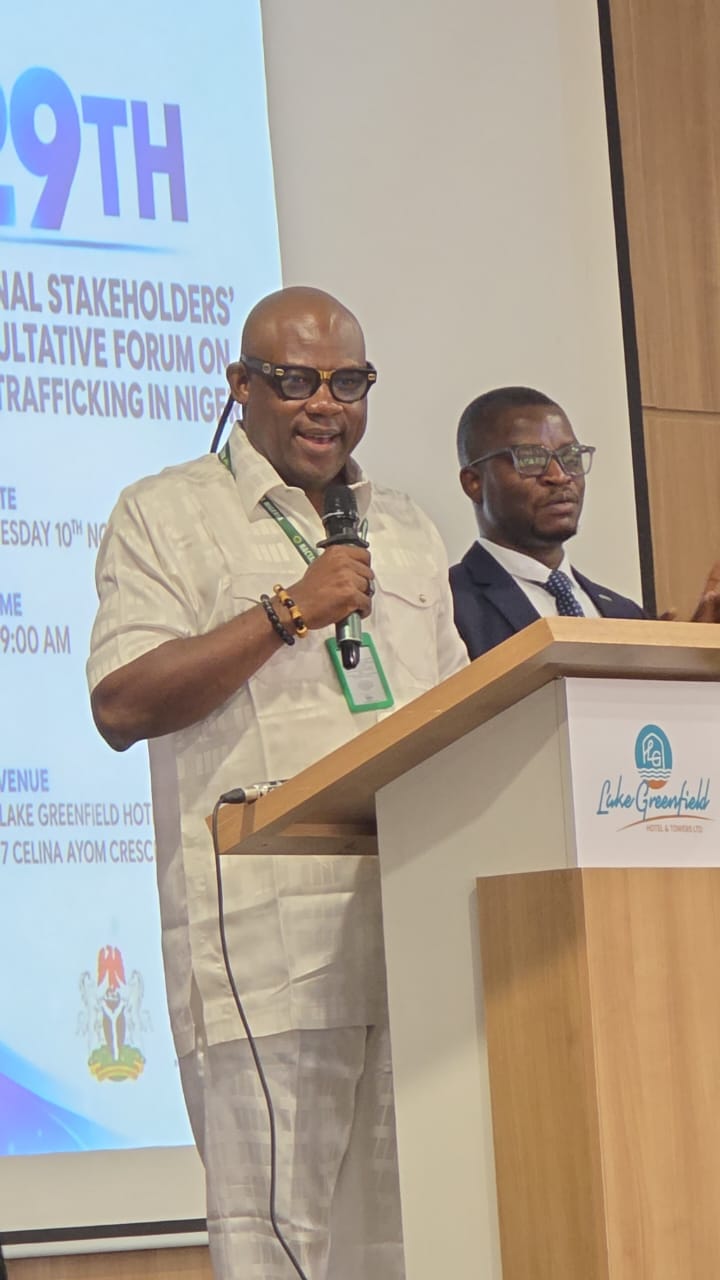
Osita Osemene, president of the Network of Civil Society Organisations Against Child Trafficking, Abuse and Labour (NACTAL), said on Tuesday that his administration would prioritise repairing strained relationships between NAPTIP state commands and the network’s chapters.
Speaking at the 29th National Stakeholders Consultative Forum on Human Trafficking in Nigeria in Abuja, Osemene said poor relations in some states had weakened the collaboration needed to tackle trafficking.
“I have seen that in some states the relationship between NAPTIP command and NACTAL are strained. We shall change this,” he said.
He also called for greater unity among civil society organisations, urging NAPTIP’s director-general to encourage organisations working with the agency to become members of NACTAL.
Osemene appealed to non-governmental organisations and other civil society groups to register with the network, saying a common platform would improve coordination and strengthen Nigeria’s reporting on human trafficking.
“We want to achieve a good coordination. A country with a good coordination will make a good report because we are going to be reporting as one,” he said.
He said his administration would also focus on building the capacity of NACTAL members to strengthen their contribution to anti-trafficking efforts and improve collaboration at state and federal levels.
Citing engagements with anti-trafficking organisations in Ghana, Mali, Senegal and other countries, Osemene said Nigeria had made progress in government-civil society collaboration.
“We noticed that Nigeria is at the top,” he said, adding that NACTAL would strengthen its relationship with NAPTIP.
NAPTIP Director-General Binta Lami Adamu Bello also stressed the importance of collaboration, describing human trafficking as a continuing challenge that disproportionately affects women.
She raised concerns about the absence of NAPTIP commands in some states, specifically mentioning Delta, which she described as a major trafficking route.
Bello said state anti-trafficking task forces had been established in 25 states, while 10 states were yet to establish theirs. She called for stronger cooperation among states and partners to ensure responses were coordinated and responsive to emerging trafficking trends.
She expressed hope that the forum would provide an opportunity to review the country’s 2027 National Action Plan on Trafficking in Persons.
Attorney-General of the Federation and Minister of Justice Lateef Fagbemi said the Tinubu administration remained committed to combating human trafficking, arguing that poverty and vulnerability created conditions that traffickers exploited.
He said government programmes under the Renewed Hope Agenda were intended to reduce poverty, while reforms to the judicial system and improved intelligence sharing would help bring perpetrators to justice.
Fagbemi also called for greater state participation in funding anti-trafficking efforts, saying responsibility should not rest solely with the federal government because victims and perpetrators came from the states.
He urged stakeholders to use the review of the 2027 national action plan to address identified gaps, strengthen public awareness and improve prevention efforts.
Javier Leon, deputy team lead of FIAP, said Nigeria had made important efforts to combat trafficking but warned that no institution could address the problem alone.
He said cooperation, trust and shared commitment among government agencies, civil society and international partners were essential to achieving lasting results.
He described the impending end of the current National Action Plan as an opportunity to assess progress, identify shortcomings and establish priorities for the next plan.
Leon said the success of anti-trafficking efforts should not be measured only by the number of meetings held or officers trained, but also by the lives protected, victims supported and people prevented from falling into trafficking.
Other organisations and international partners at the forum also delivered goodwill messages, pledging continued support for Nigeria’s efforts to combat human trafficking and stressing the need for stronger collaboration among government institutions, civil society groups and development partners. They included the International Organization for Migration (IOM), the Swiss Embassy, the International Centre for Migration Policy Development (ICMPD), the European Union (EU), UNODC and other stakeholders.
