

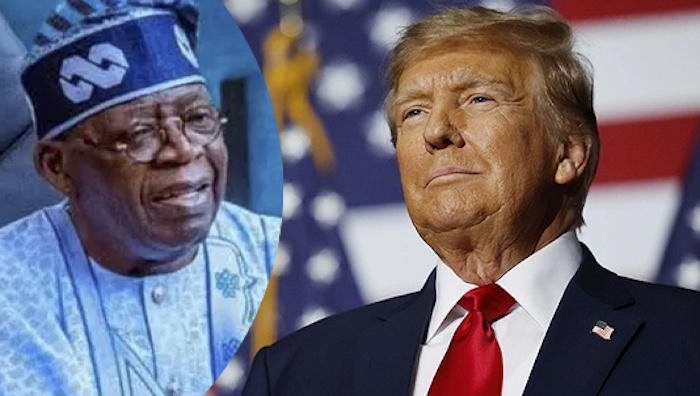
Former Vice President and presidential candidate of the African Democratic Congress (ADC), Atiku Abubakar, has challenged the United States Federal Bureau of Investigation (FBI) over its decision to withhold potentially disclosable records relating to President Bola Ahmed Tinubu.
Atiku argued that the agency should not rely broadly on the justification of “danger to lives” to prevent the public from accessing information that may legitimately be released under applicable US disclosure laws.
The former vice president made his position known through a statement issued by his Senior Special Assistant on Public Communication, Phrank Shaibu.
According to Atiku, Nigerians would find it difficult to accept the FBI’s invocation of potential danger to human lives as a sufficient reason to keep relevant records away from public scrutiny, particularly amid what he described as worsening insecurity and economic hardship in Nigeria.
“The FBI says disclosure could endanger lives. Which lives? Nigerians are already dying,” Atiku said.
He argued that the situation in Nigeria had deteriorated significantly under the Tinubu administration, with citizens facing the combined pressures of insecurity, rising living costs, unemployment and declining purchasing power.
Atiku alleged that economic policies implemented by the administration had placed enormous pressure on ordinary Nigerians and made basic necessities increasingly difficult to afford.
He pointed particularly to the removal of the petrol subsidy, a policy introduced by President Tinubu shortly after assuming office in May 2023.
According to the former vice president, the subsidy removal was implemented without adequate measures to cushion its effects on vulnerable Nigerians.
“In the past three and a half years since Tinubu became Nigeria’s President, he has pursued economic policies that have made his government a threat to the daily survival of ordinary Nigerians,” he said.
Atiku also linked the country’s security challenges to the broader difficulties confronting citizens, arguing that Nigerians were being exposed to threats from terrorists and bandits while many others were struggling to survive the economic crisis.
He said the human cost of the country’s difficulties could be seen in communities affected by insecurity as well as among families unable to meet the rising costs of food, healthcare, transportation and housing.
“Many have been killed by terrorists and bandits. Many more have died amid hunger, inability to pay medical bills and the crushing emotional and economic pressure of being unable to provide food, shelter and basic necessities for their families,” he said.
The former vice president said the economic hardship had fundamentally changed the way many Nigerian households lived.
He claimed that families that previously managed to provide several meals a day were now struggling to afford even one, while parents were increasingly unable to pay for medicines and other essential healthcare needs.
“Families that once managed three meals now struggle for one. Parents cannot afford medicines for sick children. Breadwinners are buckling under debt and unbearable economic pressure,” he said.
Atiku attributed much of the hardship to the administration’s economic policies, particularly the petrol subsidy removal, which triggered significant increases in fuel prices and contributed to higher transportation and living costs.
He questioned the extent to which Nigerians had benefited from the policy and challenged the government to demonstrate that the reforms had improved the living standards of citizens.
“So when Tinubu boasts that subsidy is gone, Nigerians should ask him what exactly he is celebrating: the empty cooking pots, abandoned medical prescriptions, unaffordable transport fares or businesses struggling to survive?” he asked.
He added that his vision of Nigeria would not define economic success by the capacity of citizens to endure hardship.
Atiku’s comments, however, went beyond criticism of the Nigerian government. He specifically addressed the FBI’s position on the release of records concerning Tinubu.
The former vice president clarified that his demand for greater disclosure did not mean that sensitive information capable of compromising legitimate US law-enforcement operations should be made public.
He acknowledged that information relating to undercover agents, confidential sources and investigative techniques deserved protection.
Atiku said the FBI should redact any information that American law genuinely requires to remain confidential but argued that such protections should not be extended unnecessarily to records that could lawfully be disclosed.
“Protect your agents. Protect your sources. Protect legitimate investigative methods. Redact whatever American law genuinely requires you to redact,” he said.
“But do not stretch those protections until they become a bulletproof vest for Tinubu.”
The former vice president said his demand should not be interpreted as an attempt to involve the United States in Nigeria’s domestic political affairs.
Instead, he described it as a call for transparency and democratic accountability, arguing that citizens have a legitimate interest in information concerning individuals who occupy positions of significant political power.
“Our demand of American law enforcement is not a call to interfere in Nigeria’s politics. It is a humanitarian and democratic appeal rooted in the principle that people have a right to information legitimately available about those who exercise enormous power over their lives,” he said.
Atiku maintained that Nigerians have a right to understand the history and character of their political leaders, particularly when relevant information is held by foreign law-enforcement agencies and can legally be released.
He argued that transparency should prevail where disclosure would not compromise legitimate investigations or endanger protected individuals.
“Nigerians have a democratic right to know the history and character of the man who occupies their country’s highest office,” he said.
He further urged the FBI to release any information that could legally be made public without jeopardising investigators, confidential sources or legitimate law-enforcement operations.
“If information can lawfully be released without endangering investigators, confidential sources or legitimate law-enforcement operations, release it,” he said.
Atiku also warned against allowing American secrecy laws to inadvertently shield political leaders from legitimate public scrutiny in other countries.
He said Nigerians were not asking the United States to manage or determine the direction of Nigeria’s democracy, but were seeking access to information that could legitimately contribute to democratic accountability.
“Nigerians are not asking America to conduct our democracy for us,” he said.
His comments come amid continued political contestation in Nigeria as opposition parties prepare for the 2027 general election. Atiku, who was the Peoples Democratic Party presidential candidate in the 2023 election, has since become the presidential candidate of the ADC and is part of a broader opposition effort ahead of the next presidential contest.
The controversy over the FBI records has therefore taken on an additional political dimension, with questions about transparency and the public availability of information concerning Nigeria’s political leadership becoming part of the wider debate.
The Tinubu administration and its supporters have consistently defended the government’s economic reforms as necessary measures aimed at stabilising Nigeria’s finances and laying the foundation for long-term economic growth. Critics, however, argue that the immediate consequences have placed an excessive burden on households and businesses.
Atiku’s latest statement reflects that broader opposition argument while also placing pressure on the FBI to explain the scope of information it is withholding.
For the former vice president, the central issue is whether legitimate law-enforcement confidentiality is being applied appropriately or whether it is being used too broadly to prevent public access to information.
He concluded his appeal to the FBI with a direct message: “Protect your investigators. Protect your sources. Protect your methods. But do not protect the truth from Nigerians.”
Atiku argued that Nigerians were already bearing the consequences of insecurity and economic hardship and that transparency was therefore essential to democratic accountability.
The dispute over the records is likely to remain part of the political conversation as Nigeria moves closer to the 2027 elections, particularly as opposition groups intensify scrutiny of the Tinubu administration and seek greater access to information concerning the country’s political leadership.
