

Abia State Governor, Dr Alex Otti, has celebrated Ohanaeze Ndigbo Worldwide on its 50th anniversary, urging the apex Igbo socio-cultural organisation to use the milestone as an opportunity for honest reflection and renewed commitment to the future of Ndigbo.
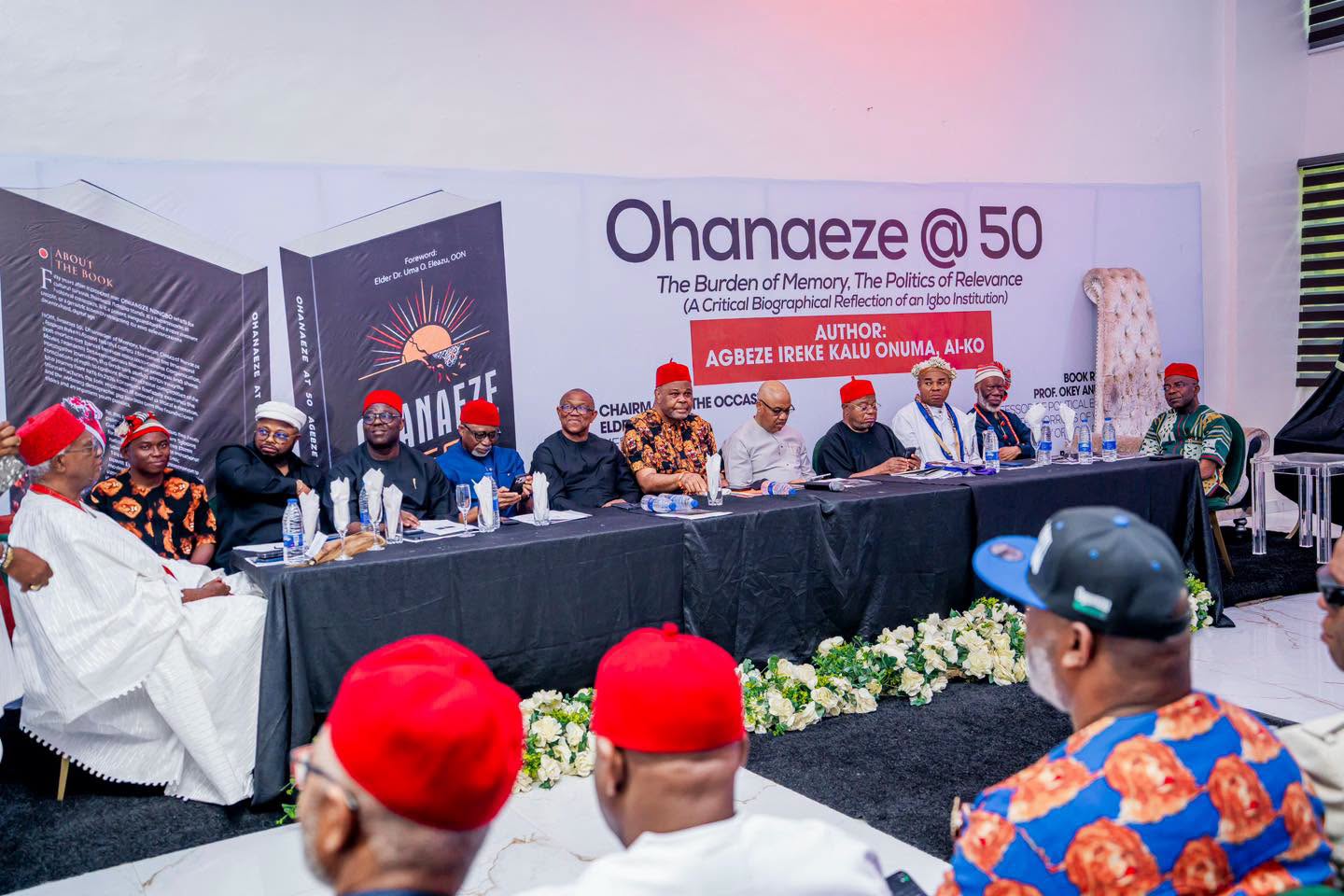
Otti made the call in Lagos while speaking at the public presentation of a new book examining the history, leadership, achievements and challenges of Ohanaeze Ndigbo.

The governor said he joined eminent Igbo leaders, traditional rulers and other distinguished guests at the event in Ikeja, Lagos, where the book, Ohanaeze at 50: The Burden of Memory, The Politics of Relevance: A Critical Biographical Reflection of an Igbo Institution, written by Agbaeze Ireke Kalu Onuma, was presented to the public.
Otti said his speech at the occasion, titled “Ohanaeze at 50: A Book That Holds Up the Mirror,” focused on the significance of the publication and the need for the organisation to critically examine its role and future as it marks five decades of existence.

According to the governor, the 602-page book goes beyond a chronological account of Ohanaeze Ndigbo’s history, offering a critical examination of the organisation’s leadership, accomplishments, challenges and continuing relevance to the Igbo people.
He said the anniversary provided an opportunity to celebrate the contributions of Ohanaeze while simultaneously asking important questions about its present position and future direction.
“At 50, Ohanaeze Ndigbo deserves celebration, but also honest reflection,” Otti said.

The governor used a quotation attributed to American comedian and actress Phyllis Diller to illustrate the importance of reflection at a significant milestone.
“Maybe it’s true that life begins at fifty. But everything else starts to wear out, fall out, or spread out,” the quotation states.
Otti said the message was particularly relevant to Ohanaeze because longevity alone does not guarantee continued relevance. Rather, institutions must constantly examine their effectiveness and adapt to changing circumstances.
He said the book challenges readers to look beyond the historical achievements of Ohanaeze and consider what the organisation has become, what it ought to represent and what it must do to remain meaningful to future generations of Ndigbo.
According to him, the history of an institution provides an important foundation, but its relevance must be continually renewed through purposeful action and responsiveness to contemporary realities.
“Heritage provides a foundation, relevance must be earned continuously,” the governor said.
Otti argued that the future of Ndigbo would require institutions capable of engaging young people and responding effectively to developments in technology, innovation and the changing character of the global Igbo community.
He said Ohanaeze and other institutions serving Ndigbo should find ways to translate the people’s strong cultural identity and heritage into greater economic, intellectual and political strength.
The governor’s remarks placed particular emphasis on the need for intergenerational engagement, suggesting that the experiences and contributions of older generations should be connected with the aspirations, skills and perspectives of younger Igbo people.
He also highlighted the growing global presence of Ndigbo, noting the importance of building stronger connections between Igbo communities in Nigeria and those living in different parts of the world.
Otti commended Onuma for undertaking what he described as an important intellectual project and recommended the book to people interested in the history, identity, unity and future of Ndigbo.
He said the publication should stimulate broader discussions about the role of Ohanaeze Ndigbo and the responsibilities that come with leading and representing a large and diverse people.
The governor stressed that the 50th anniversary should not be treated simply as a celebration of the organisation’s past.
“‘Ohanaeze at 50’ is not merely a record of history, it is an invitation to reflect on where we are and where we should be headed,” he said.
He reinforced the point with another quotation, attributed to former American baseball player Chili Davis: “Growing old is mandatory; growing up is optional.”
For Otti, the quotation underscores the distinction between the passage of time and institutional growth. He suggested that an organisation can survive for decades while still needing to evolve in response to new social, economic, technological and political realities.
He therefore called for the 50th anniversary of Ohanaeze Ndigbo to serve as a platform for deeper conversations about the organisation’s future and the kind of institutions required to advance the interests of Ndigbo.
The governor said the anniversary should inspire a renewed commitment to strengthening unity, preserving cultural identity and creating opportunities for younger generations.
He also emphasised the importance of ensuring that Igbo heritage remains connected to contemporary aspirations, particularly in areas such as education, innovation, entrepreneurship, intellectual development and global engagement.
The public presentation of Onuma’s book brought together prominent Igbo figures, traditional rulers and other distinguished guests in Lagos, providing a platform for reflection on the five-decade journey of Ohanaeze Ndigbo.
As the organisation marks 50 years, Otti’s message is that its history should provide lessons for the future rather than serve only as a record of the past.
He expressed hope that the anniversary would go beyond ceremonial celebrations and encourage meaningful conversations about how Ohanaeze can remain relevant to Ndigbo in the years ahead.
The governor’s message ultimately framed the golden anniversary as both a celebration and an opportunity for renewal, with the future of the organisation dependent on its ability to preserve its heritage while adapting to the needs and aspirations of generations of Ndigbo yet unborn.
