

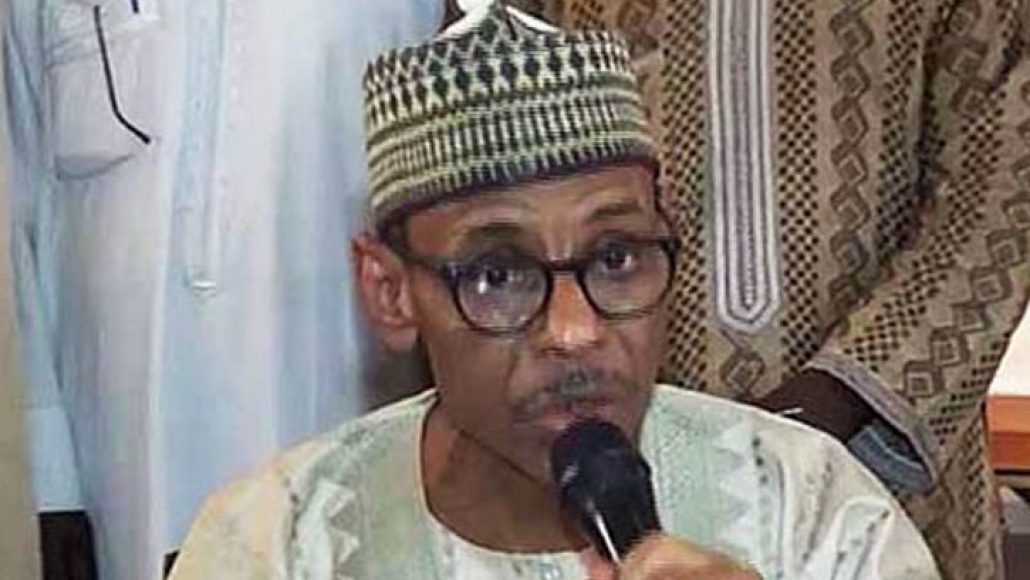
Baba-Ahmed, a former Special Adviser on Political Matters in the Office of the Vice President, described Tinubu as beatable, arguing that growing dissatisfaction with his administration could undermine his chances of securing a second term in office.
He made the remarks during an interview on Thursday’s edition of Channels Television’s Politics Today, where he expressed confidence that the opposition could defeat the ruling All Progressives Congress (APC) if voters are allowed to make their choices without interference.
Asked whether he genuinely believed Tinubu could lose the election and in which states, the PRP chairman responded:
“Yes. Many. If the election is free and fair, he will lose many states.
“He is beatable. I don’t think there is any president more beatable than Bola Tinubu.”
Calls for a Level Playing Field
Baba-Ahmed expressed hope that the Independent National Electoral Commission (INEC) would demonstrate the independence and capacity required to conduct credible elections.
He also urged the judiciary to remain impartial in handling electoral disputes, stressing that the credibility of the 2027 elections would depend largely on the ability of institutions to guarantee fairness.
“I’m hoping that INEC, somewhere along the line, finds the will and the ability to provide a level playing field, not to rig this election. And I’m hoping the judiciary will be fair,” he said.
The PRP chairman dismissed concerns about the opposition’s capacity to challenge the APC, maintaining that Tinubu’s political position was not as secure as some of his supporters might suggest.
He further accused individuals around the President of giving him the impression that his re-election was already assured.
‘2023 Is Different from 2027’
Baba-Ahmed argued that the political circumstances that brought Tinubu to power in 2023 were different from those confronting his administration ahead of the next election.
He specifically pointed to the North’s contribution to Tinubu’s electoral victory, alleging that many voters who supported him in 2023 had become dissatisfied with his government.
“2023 is dramatically different from 2027. Tinubu came to power in 2023 substantially because the North gave him their votes. They believed he would fix some of the terrible things. The Northwest has now turned its back on him,” he said.
He also questioned the significance of large crowds at APC campaign rallies, alleging that some participants were transported to venues and paid to attend. He suggested that rally attendance should not automatically be interpreted as evidence of genuine electoral support.
Raises Concerns Over Electoral Violence
The opposition leader expressed concern about political violence and what he described as the inability of security agencies to guarantee a safe environment for political activities.
He warned that failure to address intimidation and violence could prevent opposition parties from campaigning freely ahead of the elections.
Baba-Ahmed also criticised the reported arrest of individuals for shouting “Bamayi”, arguing that such expressions should not constitute a criminal offence. He said punishing people for making political remarks could send a troubling signal about the state of political freedom.
Tinubu won the 2023 presidential election with 8,794,726 votes, defeating Atiku Abubakar of the Peoples Democratic Party (PDP), who secured 6,984,520 votes, and Peter Obi of the Labour Party, who polled 6,101,533 votes.
The election outcome was challenged by opposition candidates but was subsequently upheld by the Presidential Election Petition Tribunal and the Supreme Court.
As political parties prepare for the 2027 contest, Baba-Ahmed’s remarks add to the growing debate over the President’s performance, the strength of the opposition and the conditions required for credible elections.
The electoral timetable supplied in the report schedules the presidential and National Assembly elections for January 16, 2027, while governorship and State Houses of Assembly elections are scheduled for February 6, 2027.
