

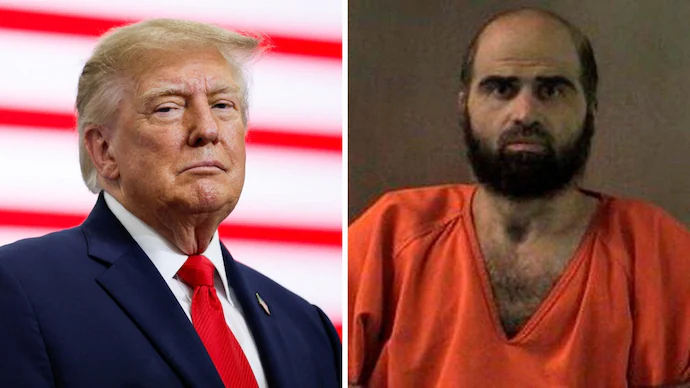
Trump said Hasan’s execution by firing squad would proceed as scheduled but would not be broadcast live, following political and religious criticism of the proposal.
The President explained that some people opposed to the livestream had expressed concerns about publicly broadcasting an execution.
“I think streaming the execution for all to see might have been a strong deterrent for the World to witness how America deals with Terrorists and SCUM like Hasan,” Trump said.
“He will die, as scheduled, by firing squad, but this event will not be streamed,” he added.
The proposal to broadcast the execution was earlier raised by US Defence Secretary Pete Hegseth during an interview with conservative broadcaster Real America’s Voice, reported on October 8.
Speaking aboard the aircraft carrier USS Abraham Lincoln, Hegseth argued that making the execution available for public viewing would demonstrate the consequences of carrying out terrorist attacks.
He said the public needed to understand that there were serious consequences for such crimes.
However, the proposal attracted criticism, including from Hasan’s lawyer, John Galligan, who primarily handles civil matters for the convicted shooter.
Speaking to the BBC, Galligan said Trump’s decision to abandon the livestream plan did not surprise him.
“It was initially a dumb decision and statement by Hegseth to livestream any execution, and it violated the Army’s own regulation,” Galligan said.
He also pointed out that Hasan was paralysed from the chest down, adding that Trump had allegedly been unaware of the condition when the livestream proposal was approved.
“The damage has already been done. The Army is now just trying to clean up the mess,” Galligan said, warning that the controversy would leave a lasting stain on the US military justice system.
Galligan added that it was unclear whether Hasan had been informed of Trump’s decision to reverse the livestream plan.
Hasan was convicted for the November 5, 2009, shooting at Fort Hood, now known as Fort Cavazos, in which 13 people were killed and 32 others wounded. The victims were unarmed military personnel at the Texas installation.
The attack was one of the deadliest shootings at a US military base and prompted extensive scrutiny of security procedures and the handling of warning signs before the incident.
Hasan’s case has remained controversial, particularly because of the scale of the killings and the military justice proceedings that followed.
If carried out as described, his execution by firing squad would mark the first US military execution in more than six decades.
Trump’s decision to cancel the proposed broadcast has shifted the debate from whether the execution should be publicly shown to questions about the appropriate limits of government transparency, the treatment of condemned prisoners and the role of executions as a deterrent.
The execution arrangements and reported schedule have not been independently verified for this article.
