

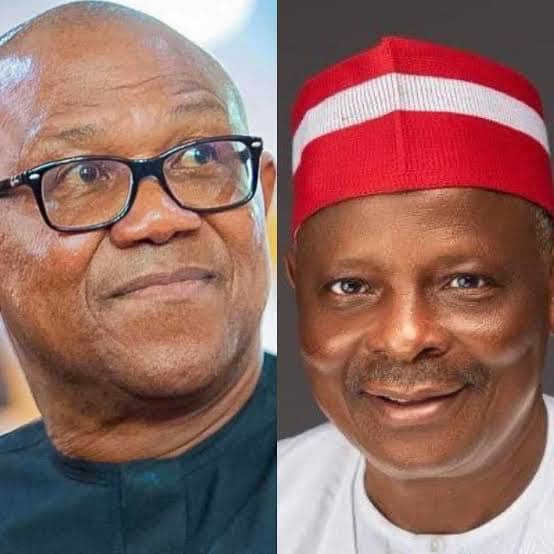
The presidential candidate of the Nigeria Democratic Congress (NDC), Peter Obi, has promised to restore petrol subsidy if elected president in 2027, saying his administration would retain the policy after eliminating the corruption associated with its implementation.
Obi made the declaration on Tuesday during an interview with the BBC, clarifying his position after earlier comments had suggested that an NDC government would seek to reform the subsidy regime rather than simply restore it in its previous form.
The former Anambra State governor said the fundamental problem with petrol subsidy was not necessarily the policy itself but the corruption surrounding its administration.
“From day one, I’ve talked about subsidy. I talked about corruption; corruption is the problem of subsidy,” Obi said.
Asked directly whether he would reintroduce subsidy if elected president, Obi answered in the affirmative but stressed that his administration would first tackle the corruption associated with the scheme.
“Yes. But remember, I have qualified it, not with the corruption that’s associated with it. I’ll remove the corruption and retain the subsidy,” he said.
The position represents a significant shift from the stance Obi took during the 2023 presidential election campaign, when he advocated the removal of fuel subsidy and argued that the resources being spent on the scheme should be redirected to critical sectors of the economy.
At the time, Obi said greater investment in education, healthcare, infrastructure and other productive sectors would provide better value for public funds than continuing with the subsidy arrangement.
His latest position comes about two weeks after his running mate, Rabiu Kwankwaso, publicly indicated that an NDC administration would consider reintroducing subsidy in a different form if the opposition party wins the 2027 presidential election.
Kwankwaso, a former Kano State governor, made the comments during an interview with Arise TV while discussing the economic consequences of the removal of subsidy by President Bola Tinubu.
Asked whether the NDC would face difficulties campaigning in the North-West, where the issue of fuel subsidy remains politically sensitive, Kwankwaso said the party would approach the matter differently.
“No, no, no. Look, we are bringing subsidy in our own way,” he said.
He explained that the proposed approach would involve increased investment in domestic refineries and petroleum production, with the aim of ensuring that petrol becomes available to Nigerians at more affordable prices.
Kwankwaso also criticised the manner in which the Tinubu administration removed subsidy shortly after assuming office, arguing that the policy was implemented without sufficient consideration of its impact on Nigerians.
President Tinubu announced the removal of fuel subsidy during his inauguration on May 29, 2023, declaring that “fuel subsidy is gone.” The Federal Government subsequently argued that the decision was necessary to reduce the financial burden of subsidy payments and redirect resources towards infrastructure and other areas of national development.
The policy triggered a sharp increase in petrol prices and contributed to rising transportation and living costs, making subsidy removal one of the most contentious issues in the Tinubu administration.
Obi has since criticised aspects of the policy while also arguing that corruption remains a major challenge in Nigeria’s management of public resources.
During the BBC interview, he linked the fight against corruption to the conduct of political leaders, saying the personal example set by a president and members of the president’s immediate family would be crucial.
“If you are not stealing, if you are not involved, your wife and family are not involved, you reduce it by 50 per cent,” he said.
Obi also rejected suggestions that he should withdraw from the 2027 presidential race if opposition parties eventually decide to field a consensus candidate.
Rather than stepping aside, he said opposition parties should concentrate on developing the right strategy to defeat the ruling party.
“We don’t need to step down. We need to do the right thing,” he said.
The NDC candidate was also asked about the anti-corruption record of former President Muhammadu Buhari, who came to power in 2015 on a strong anti-corruption platform.
Responding to suggestions that Buhari had also attempted to keep his family away from government, Obi said Nigerians should not base their decision on that comparison.
“Nigerians should not decide with that,” he said, adding, “He was not in charge. The difference is that I’ll be in charge.”
The exchange came against the backdrop of continuing investigations into corruption allegations involving some former government officials under the Buhari administration.
With the 2027 presidential election approaching, the fuel subsidy debate is expected to remain a major issue in the campaigns of the major political parties.
For Obi and the NDC, the proposed approach appears to combine subsidy with measures aimed at reducing corruption, expanding domestic refining capacity and increasing local petroleum production.
The Tinubu administration, meanwhile, continues to defend subsidy removal as a necessary economic reform, arguing that maintaining the scheme placed an unsustainable burden on government finances.
The disagreement highlights a major policy choice that Nigerians are likely to confront during the 2027 election: whether to maintain the current subsidy-free regime, restore subsidies in a restructured form, or pursue increased domestic production and refining as a way of lowering petrol prices.
Obi’s latest declaration therefore places fuel subsidy firmly at the centre of the NDC’s emerging economic agenda ahead of the 2027 presidential contest.
