

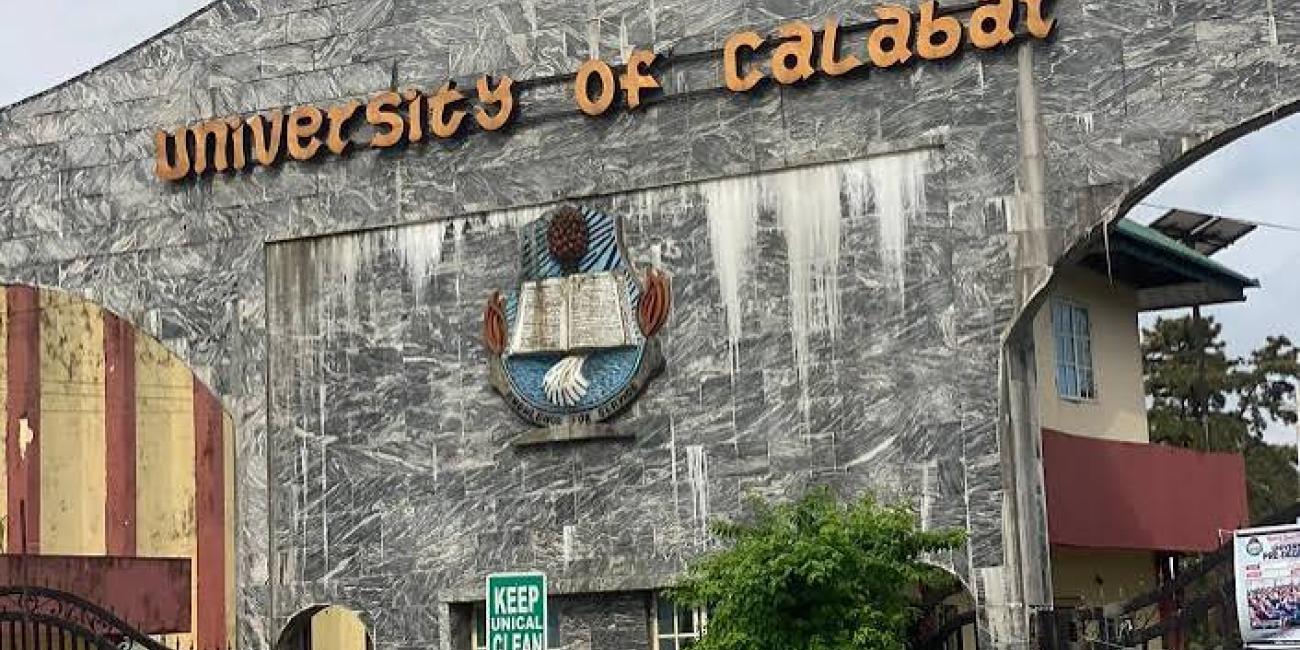
The University of Calabar (UNICAL) has suspended nine students for the 2026/2027 academic session over examination misconduct.
The university disclosed the disciplinary action in a statement issued by its Public Relations Unit and made available to journalists in Calabar on Monday.
According to the institution, the affected students have been formally notified of their suspension through letters signed by the Registrar, Dr Chukwuka Icha.
The university said the decision followed the approval by its Senate of recommendations submitted by the Examination Misconduct Committee after considering cases involving the affected students.
The suspension means that the students will not be allowed to participate in academic activities during the 2026/2027 session. They are expected to return to the university and resume their studies in the 2027/2028 academic session.
The university did not disclose the specific nature of the examination offences committed by the students or the circumstances surrounding the individual cases.
Five of the nine suspended students are from the Department of Theatre and Media Studies in the Faculty of Arts.
The remaining four students are drawn from different departments and faculties across the university.
They include a student from the Department of Human Nutrition and Dietetics in the Faculty of Basic Medical Sciences; a student from the Department of Geology in the Faculty of Physical Sciences; a student from the Department of Pharmacology in the Faculty of Basic Medical Sciences; and another student from the Department of Sociology in the Faculty of Social Sciences.
The university directed relevant officials and academic authorities to ensure that the suspension is fully implemented.
Those specifically instructed to take note of the decision include the Acting Chief Security Officer, deans of faculties, heads of departments and other relevant units of the institution.
The directive is expected to ensure that the affected students do not participate in academic activities or access institutional privileges inconsistent with the terms of their suspension during the period specified by the university.
Examination misconduct remains a serious disciplinary issue in Nigerian tertiary institutions, with universities generally maintaining regulations designed to protect the credibility of their assessment and certification systems.
The University of Calabar’s action reflects the role of its Examination Misconduct Committee and Senate in investigating and determining disciplinary cases involving students.
Under the university’s procedures, examination-related allegations are considered through the appropriate institutional structures before disciplinary measures are approved by the relevant authorities.
In this case, the Examination Misconduct Committee submitted recommendations to the university Senate, which subsequently approved the sanctions imposed on the nine students.
The affected students are expected to remain away from academic activities until the commencement of the 2027/2028 academic session, subject to any applicable university regulations or subsequent decisions by the institution.
The university’s management has also placed responsibility on its academic and administrative officers to ensure that the suspension order is respected across the affected faculties and departments.
By notifying the students formally through letters signed by the Registrar, the institution has communicated the disciplinary decision through its established administrative process.
The development comes as universities across the country continue to emphasise academic integrity and adherence to examination regulations.
Examinations are central to determining students’ academic progress and awarding qualifications, making the credibility of assessment processes an important responsibility for tertiary institutions.
The University of Calabar has therefore reiterated through the disciplinary action that students found to have breached examination rules may face sanctions in accordance with established university procedures.
The nine students affected by the latest decision are expected to remain suspended for the 2026/2027 academic session and return to their respective programmes in the 2027/2028 academic session, in line with the university’s directive.
