

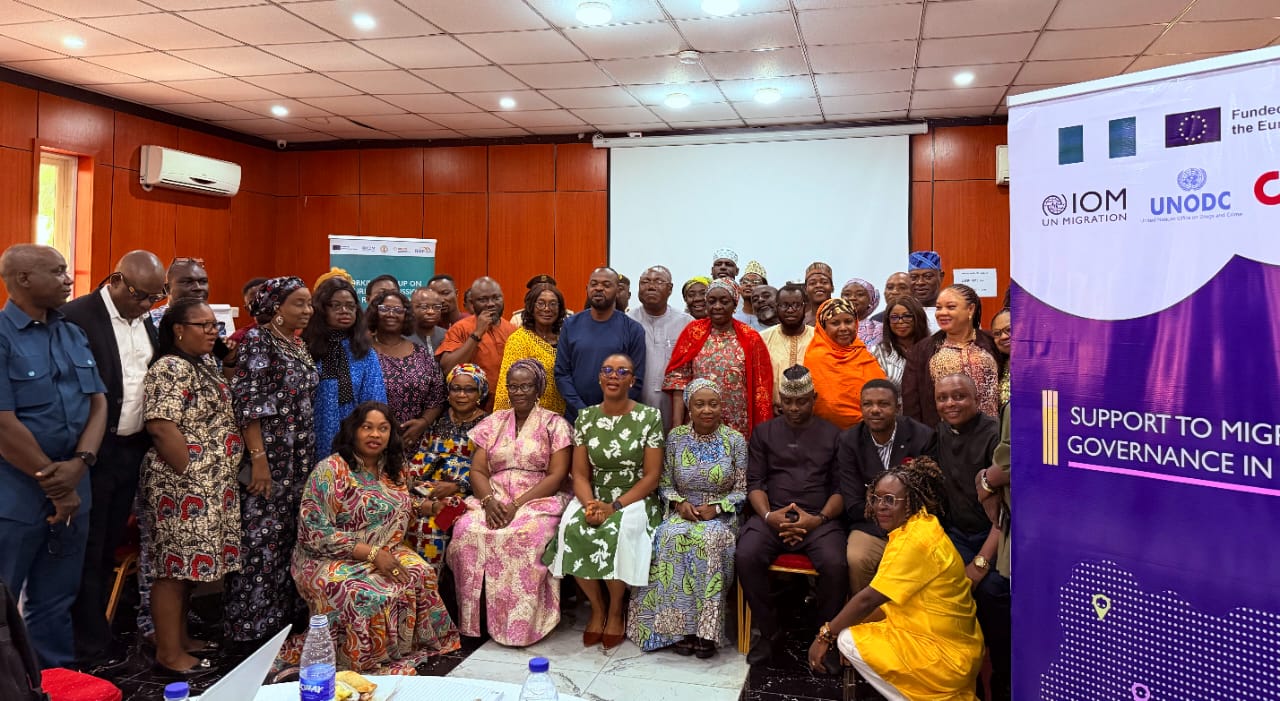
The outgoing president of Nigeria’s Network of Civil Society Organisations Against Child Trafficking, Abuse and Labour (NACTAL), Abdulganiyu Abubakar, has introduced his successor, Osita Osemene, to government agencies and development partners involved in migration issues.
Abubakar made the introduction during a two-day meeting of the Working Group on Return, Readmission and Reintegration (RRR) in Nigeria, a quarterly forum involving government agencies, development partners, civil society organisations, academia and the media.
Abubakar said the move was intended to ensure continuity in NACTAL’s engagement with government and development partners following the change in leadership.
“I have been representing NACTAL on this platform for the last six years, and most of the stakeholders know me as the national president,” Abubakar told reporters after the meeting.
“With the change of leadership, it is important that I formally introduce my successor so that they will know that leadership has changed hands and continue to accord him the same support, cooperation and understanding that I received over the years.”
Abubakar said the meeting was his final RRR gathering as NACTAL president and that Osemene had received a positive reception from participants.
Osemene, who is also involved in migration-related civil society work through the Patriotic Citizen Initiatives, said the meeting provided an opportunity for practitioners and government agencies from Nigeria’s six geopolitical zones to review activities relating to the return and reintegration of migrants.
He said participants also reviewed a draft standard operating procedure (SOP) for return and reintegration, allowing stakeholders to contribute to and validate the document.
“The SOP is something that is coming out very strong to address some of those challenges,” Osemene said, referring to difficulties faced by returnees during the reintegration process.
He said the review could strengthen Nigeria’s approach to migrant reintegration and improve coordination among stakeholders.
Osemene also described Abubakar’s introduction of the incoming president to partners as a new practice for NACTAL, saying previous leadership transitions had not involved the same level of formal handover to external stakeholders.
He said the approach would strengthen NACTAL’s partnerships and make it easier for the new leadership to engage organisations already working with the network.
“This is going to strengthen our existence as a network. It’s going to strengthen the structure of NACTAL because one of the strengths of the network is partnership, strong partnership, strong collaboration,” Osemene said.
