

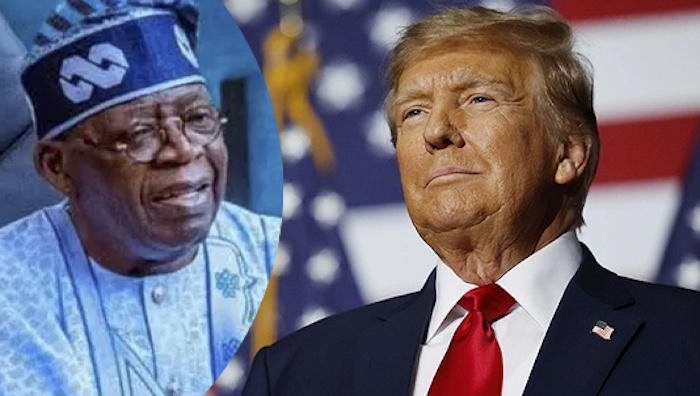
A United States federal judge has reportedly granted US Attorney for the District of Columbia Jeanine Pirro an additional four days to comply with an order concerning drug trafficking records held by American law-enforcement agencies relating to Nigerian President Bola Ahmed Tinubu.
According to information circulated by Washington-based policy and lobbying firm Von Batten-Montague-York, Judge Beryl Howell declined Pirro’s request for a further 10 days and instead set August 21, 2026, as the new deadline for compliance.
The development concerns records reportedly held by the US Department of Justice (DOJ), Federal Bureau of Investigation (FBI) and Drug Enforcement Administration (DEA). The records have been the subject of a legal battle that, according to the firm, has remained unresolved for more than three years.
The claim has generated renewed attention in Nigeria and the United States because of the political implications surrounding the records and allegations concerning Tinubu. It is important to note, however, that the existence of records relating to an investigation or law-enforcement inquiry does not by itself establish criminal wrongdoing.
Pirro, who was appointed by President Donald Trump as US Attorney for the District of Columbia, has reportedly been involved in efforts to comply with the court’s directive concerning the requested documents. Her appointment was confirmed by the US Senate in August 2025.
The latest development was disclosed in a post attributed to Von Batten-Montague-York, which welcomed the court’s decision to give the Department of Justice only a limited extension.
The firm reportedly argued that the matter had already been pending for several years and that there was therefore little justification for granting another lengthy extension.
“We deeply appreciate US Attorney Pirro and the DOJ’s renewed motivation to release these documents, and we agree with Judge Howell. This case has been pending for three years. The time to release the Tinubu drug-trafficking files is now,” the firm was quoted as saying.
The group also argued that Washington’s strategic relationship with Nigeria should not be used as a reason to prevent disclosure of records that a court has ordered to be addressed.
“As President Trump has indicated, our shared interests with Nigeria do not mean supporting an alleged drug trafficker,” it added.
The language used by the group reflects its position on the matter and should not be interpreted as a judicial finding that President Tinubu is a drug trafficker.
The dispute appears to centre on access to government records maintained by US law-enforcement agencies. Such records can include investigative material, correspondence and other documents, although the precise contents of the records covered by the order would depend on the underlying case and the court’s directives.
The court’s decision to grant four additional days rather than the 10 days sought by Pirro places the Justice Department under a relatively tight timetable.
If the reported deadline stands, government lawyers would be expected to take the necessary steps by August 21 to comply with the order or otherwise address any legal restrictions affecting disclosure.
The development also comes at a politically sensitive period in both Nigeria and the United States. Tinubu remains a central figure in Nigeria’s political landscape, while the Trump administration has placed considerable emphasis on strengthening relations with strategic partners.
Jeanine Pirro has herself been under intense public scrutiny in recent weeks following a separate controversy involving her handling of a case concerning alleged damage to the Lincoln Memorial Reflecting Pool. Trump publicly criticised her after prosecutors moved to drop charges against former Olympic canoeist David Hearn, with the Justice Department filing stating that the damage resulted from a construction problem rather than vandalism.
That controversy is separate from the records concerning Tinubu, but it has placed Pirro’s office under heightened media attention.
The possible release of additional US government records could reignite debate in Nigeria over allegations that have circulated for years regarding Tinubu’s past activities in the United States.
Tinubu has consistently remained a major political figure despite controversies surrounding his background, and allegations about his past have been repeatedly contested politically and legally.
Any documents eventually released by US authorities would need to be examined carefully and placed within their proper legal and historical context. Investigative records can contain allegations, leads or unverified information that do not necessarily amount to findings of guilt.
For that reason, publication of any records should not automatically be interpreted as proof of criminal conduct unless the documents themselves establish such findings or are accompanied by an authoritative legal determination.
The August 21 deadline, if confirmed and not subsequently modified by the court, could therefore become an important date in the long-running dispute over access to the records.
The court’s decision to allow only four additional days rather than the 10 days requested by Pirro signals that the matter remains subject to judicial oversight and that further delays may face resistance.
For supporters of disclosure, the development represents another opportunity to obtain records they believe should be made public. For Nigerian authorities and supporters of President Tinubu, however, the issue raises concerns about the political use of historical allegations and the interpretation of law-enforcement documents.
The immediate question is whether the US Department of Justice and the agencies holding the records will release the documents by the stated deadline, seek further judicial relief, or invoke legal grounds for withholding portions of the material.
Until the documents are actually released and independently examined, claims about their contents should be treated cautiously.
The reported court order nevertheless ensures that the controversy remains active, with attention now focused on the August 21 deadline and on what, if anything, the US government ultimately makes public.
