

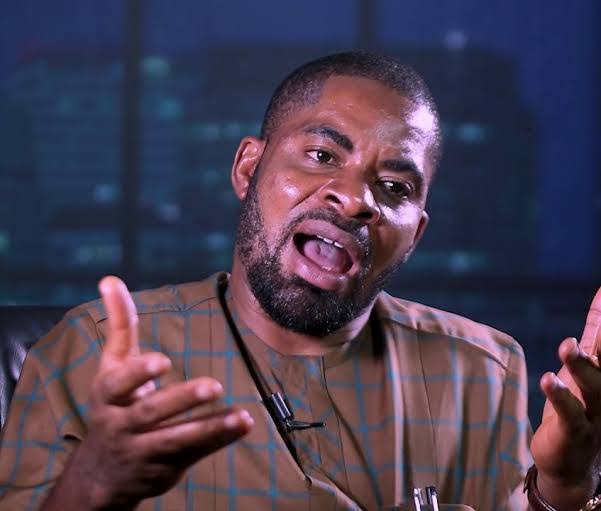
Human rights activist and lawyer, Deji Adeyanju, has sparked fresh debate in Nigeria’s political space after declaring that he is “bigger” than Nigeria Democratic Congress presidential candidate Peter Obi, insisting that the sacrifices he has made as a democracy and human rights campaigner surpass anything Obi has done for the country.
Adeyanju made the remarks during a podcast interview with broadcaster Seun Okinbaloye, where he spoke extensively about his years of activism, his role in pro-democracy struggles, and his assessment of contemporary Nigerian politics.
During the conversation, the activist argued that his contributions to the struggle for democracy and human rights in Nigeria place him in a different category from many political figures, including Obi.
“I am bigger than Peter Obi. The things I have achieved in my life as a human rights activist, he can never achieve them,” Adeyanju said.
He questioned whether the former Anambra State governor had made significant personal sacrifices in the course of Nigeria’s democratic journey.
“Has he ever made any sacrifice for the country? What does he know about the democracy that he is enjoying?” he asked.
Adeyanju maintained that his activism was rooted in years of confrontation with military and civilian authorities, participation in protests, arrests, and sustained advocacy for civil liberties and democratic governance. According to him, democracy in Nigeria was won through the sacrifices of activists, journalists, lawyers, students, and other pro-democracy campaigners who challenged authoritarian rule.
The outspoken activist suggested that many current politicians are benefiting from freedoms secured by earlier generations of democracy advocates without having participated directly in the struggle.
He said his comments were not motivated by personal hostility toward Obi but by a desire to remind Nigerians of the historical efforts that helped restore democratic rule in 1999.
Adeyanju has long been known for his criticism of successive governments and political leaders across party lines. He has also been involved in several civil society campaigns focused on police reform, electoral accountability, human rights protection, and constitutional governance.
His latest remarks are expected to generate strong reactions among supporters of Peter Obi, who has built a significant political following, particularly among young Nigerians and urban voters. Obi’s supporters often cite his record as governor of Anambra State, his emphasis on fiscal discipline, and his calls for economic reform as evidence of his leadership credentials.
The comments come amid ongoing discussions about the role of activism in Nigerian politics and the relationship between civil society movements and electoral politics. While some commentators argue that long-standing activists deserve recognition for their contributions to democratic development, others contend that electoral leadership and governance require different forms of public service.
Adeyanju did not provide specific examples of achievements that he believes make him “bigger” than Obi, but he repeatedly referenced his history of human rights advocacy and political activism during the interview.
Political observers say the statement reflects continuing tensions between some members of Nigeria’s activist community and politicians who have emerged as major opposition figures in recent years.
As of the time of filing this report, Peter Obi had not publicly responded to Adeyanju’s comments.
The exchange has nevertheless added another layer to the broader national conversation on democracy, political legitimacy, civic sacrifice, and the qualities Nigerians should value in those seeking leadership positions.
Adeyanju concluded by insisting that the struggle for democracy should not be forgotten and that Nigerians must continue to appreciate the sacrifices made by activists who confronted repression in pursuit of political freedom and constitutional governance.
